Amy Thompson Makes Brand Photography Feel Like a Deep Exhale (and a Serious Business Upgrade)
Interview by Heather Anderson
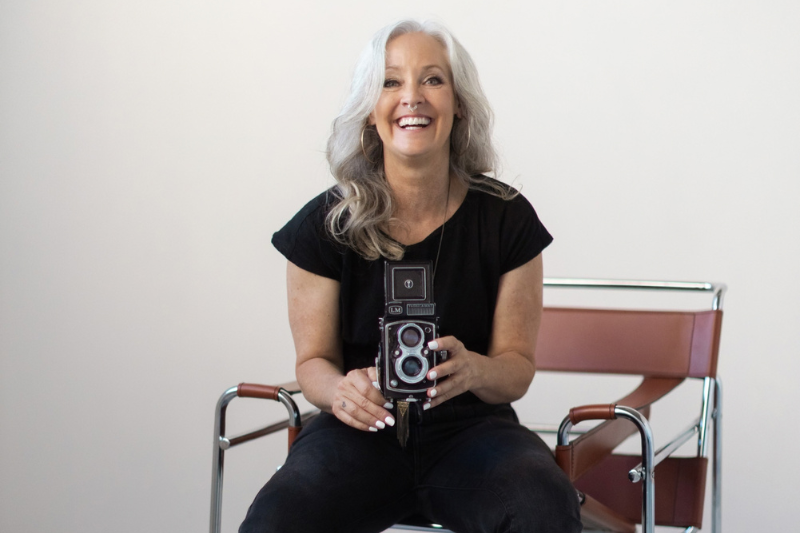
Amy Thompson is a Bay Area photographer based in Marin County who helps women founders and professionals show up online with images that feel like them. Her work is rooted in honest, intimate moments, not stiff portraits, and her shoots are thoughtfully planned to create a full gallery of versatile content: multiple outfits, locations, moods, and now video, too. If you’re a mom building a business (or rebuilding one), Amy’s approach is the kind that makes you feel supported from the first call, and proud to actually send people to your website again.
When women reach out to you for brand photography, what’s most often happening in their business right then?
Usually it’s a moment of change, momentum, or both.
A lot of women come to me when they’re rebranding, refreshing their website, launching a new offer, or starting a whole new business. Some people don’t wait until they feel “ready.” They reach out right as they’re building because they realize photos are one of the things that helps them build.
And then there are the women who simply outgrow their old photos. They look at what they’re using and think, “This doesn’t fit anymore.” That refresh moment is real.
Who are you working with most these days, and what do they tend to have in common?
I’m working with a lot of women who are leaving corporate life and stepping into something more independent. Sometimes they’re coming from tech, sometimes it’s a big corporate role, and now they’re launching themselves as a consultant or building a new service-based business.
I work with all sorts of service professionals (coaches, interior designers, real estate agents, you name it) and brick and mortar business owners as well.
What they tend to have in common is this: they’re ready to go for it. They might feel scared, but they’re not letting that stop them.
They usually have a clear vision and they understand that looking professional online is part of being taken seriously. They’re not trying to wing it anymore. They know their online presence matters, and visuals are part of the package.
“When you’re proud of your images, you show up differently. You post more easily. You send people to your website without cringing. Your confidence goes up, and that brand confidence becomes this quiet engine behind your marketing.”
You mentioned something important here: not everyone is your ideal client. What’s the difference between people who book and people who don’t?
The people who book tend to see photography as one piece of a bigger plan.
They know they’re building a real business, and they’re ready to take action on multiple pieces at once. They’re not stuck in “I’ll do this one day, then maybe that later.” They understand that photos support their website, their social content, their marketing, their credibility, and their confidence.
The people who don’t book are often stuck in hesitation, or they’re trying to do the bare minimum. That’s not a judgment. It’s just usually not the right fit for the type of work I do.
What have you learned about what women actually need from brand photography, beyond just “looking professional”?
They need range. They need variety. They need photos that show different sides of who they are.
Most women do not want a gallery that's just 10 versions of "me at a laptop smiling." That vibe had a moment, but it's not enough anymore.
Brand photography should capture personality, energy, and dimension. It should communicate what your brand feels like. And I'll tell you what shows up in almost all of my shoots: a look that's modern, bold, edgy, soulful, and free. That's the energy I bring, and the women who are drawn to it tend to be an immediate yes, because they've already seen the vibe and know it's what they want.
I also like choosing three words for someone's brand and using those words as a guide. Then we're building a gallery that actually matches who they are, not just what they think they "should" look like.
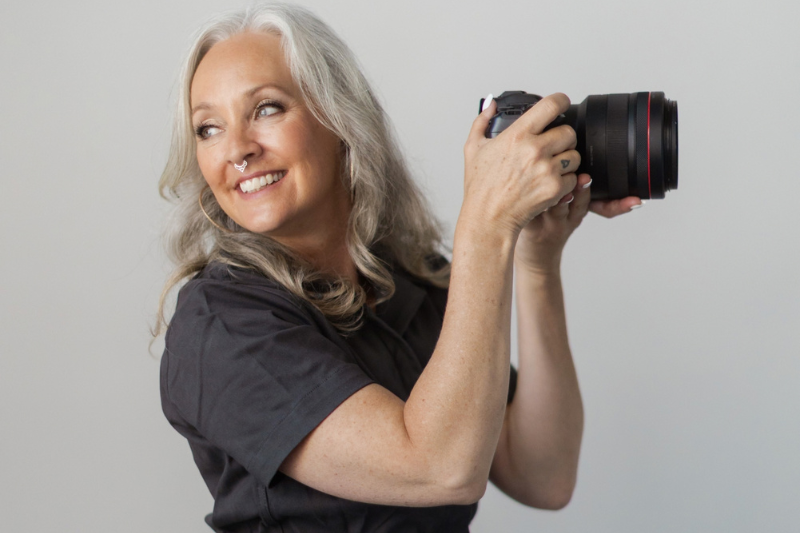
Can you share a few examples of how different this can look in real life?
Totally. No two brands are alike, so no two shoots should look the same.
I photographed a founder building an app and she wanted images that were more about mood and feeling than face-forward portraits. We did a whole faceless shoot that was really fun, black and white, urban, and creative. Her app had a travel-within-cities feel, so we leaned into that moody, city vibe.
And then there was an attorney who wanted something totally different. She really wanted her personality to come through. Attorneys are often assumed to be stuffy, but she is genuinely fun. She was floored when she saw her images because she finally felt captured. Her husband even said, “I can’t believe she captured you.” That’s the goal. Her old photos were just her staring at the camera, and you couldn’t feel her at all.
Why do women get more value from one thoughtfully planned shoot with multiple outfits and locations, versus lots of smaller sessions?
Because it takes time to get into the flow.
A lot of people dread getting their photos taken. Even if they’re excited about the result, the lead-up can feel like a whole thing: outfits, hair, makeup, nerves, “what do I do with my hands,” all of it.
Once you’re in it, it usually becomes fun. But you have to warm up. That’s why doing one more comprehensive shoot works so well. You’re already in the vibe, you’re already comfortable, you’re already set up. It’s the best time to capture variety.
Also, if you’ve done the planning, rented a location, and gotten hair and makeup done, it just makes sense to maximize that day.
Walk us through what it’s like to do a brand shoot with you, from the first call to final delivery.
It starts with a quick discovery call, usually about 15 minutes. That’s where we get a feel for each other, I answer questions, and we talk through which collection makes the most sense.
After someone books, I send a welcome email with a questionnaire, a brand photo shoot guide, and a link to schedule a planning call.
In the questionnaire, I ask for inspiration photos. I usually want around 10. Those are so helpful because they show me what someone is drawn to, even if they can’t fully describe it yet.
Then we have the planning call, and we go through everything: the inspiration images, the brand vibe, wardrobe ideas, possible locations, props, and hair and makeup if they want that support.
After the call, I put it all into a clean PDF that becomes our shoot plan. It includes inspiration images, a timeline, location details, props, and notes. I tell clients they don’t need to memorize it. It’s there so they can feel held, and so they can see I have everything mapped out.
On shoot day, I bring a printed copy because I’m old school, and it is usually tattered by the end of the day.
We start with a little pause before we jump in. A couple minutes to breathe, get centered, and clear the nerves. It sounds simple, but it changes everything. It sets the tone that this is collaborative, not a performance.
Then I start easy. I don’t open with “stand there and smile at the camera.” That’s too intimidating. We start with natural scenes: sitting, working, making coffee, movement, small moments. Once we’re warmed up, we do more direct portraits.
We also build in outfit changes and variety by design. Sometimes we’ll shoot one outfit in multiple scenes. It’s a lot of mixing and matching to make sure nothing feels repetitive.
After the shoot, clients get a proofing gallery within a week. I divide it into sections and guide them to choose a few from each section so the final set has range.
Then within about two weeks, they receive their final edited, retouched gallery, ready to use.
Location is such a big part of your work. How do you help clients choose settings, especially when they’re not sure what they want yet?
The inspiration photos are huge, and so is the vibe they describe.
If someone wants warmth, I’m looking for cozy spaces with warm neutral tones. If they want a studio look, we find a studio. If they’re a nutritionist, we need a great kitchen. If they’re a sleep consultant, a bedroom is helpful.
People often ask if they can shoot at home, usually for cost reasons. Sometimes that works, but a lot of times a house doesn’t match the brand vibe. That’s normal. Most of our houses do not look like our brand.
If someone wants to use their home, I’ll do a video walkthrough first. And if we do shoot there, I’ll move things around, clear backgrounds, and find the best light. But often, renting a location is the better move for both light and overall look.
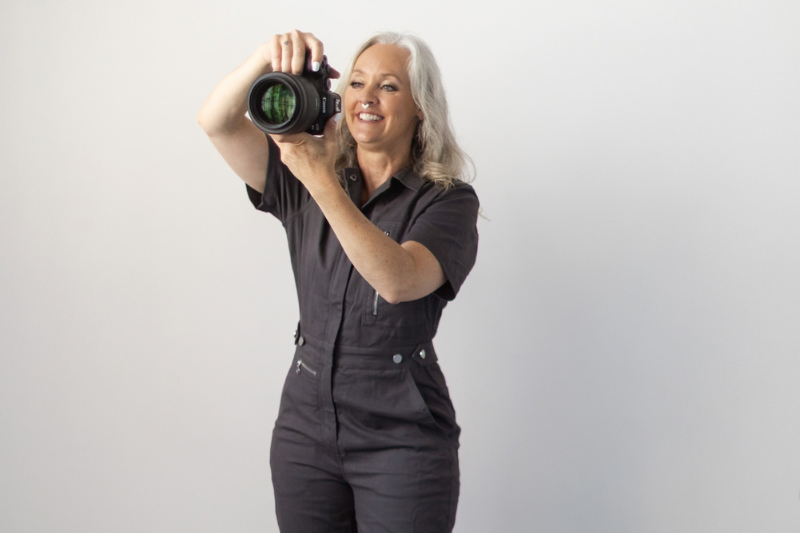
You offer multiple packages. How do you help someone decide what’s right?
I try to help people choose based on what they actually need, not what they think they “should” get.
Often what people want is variety: multiple scenes, multiple outfits, multiple locations. That takes time, planning, and space.
Here’s the general breakdown:
Brilliance: A top-tier brand experience that includes brand video, full planning support, hair and makeup, a full brand shoot, and short-form B-roll clips.
Radiance: a full brand shoot with multiple locations, multiple outfits, up to five hours, planning support, and B-roll clips.
Illuminate: one location, up to two hours, a set number of final images, and B-roll clips.
Dawn: a quick session designed for someone who truly only needs a small handful of images.
A lot of women assume they only need “a couple photos,” but when we talk through what they actually want, it usually maps to a more robust package. And I’d rather they get something that lasts and feels elevated, not something they outgrow in eight weeks.
Also, yes, I offer payment plans. I want this to feel doable.
Most women worry they’ll feel awkward on camera. What do you do to help clients feel confident and natural?
First, I tell them the truth: they’re not alone.
Most people think they’re the only one who hates being photographed, and they are not. It’s a mental thing more than anything.
I talk to them about their “why.” Why are they doing this? What’s on the other side of having images they actually love?
I also never coach in a harsh way. I don’t do “no, not like that.” I stay positive and guide gently. It’s like parenting a toddler in the best way. You’re still directing, but you’re not shaming.
We start with easy scenes to warm up. I’ll demo poses myself. We switch roles. I make it collaborative. I put on music. I bring snacks. I let myself be silly, because it gives them permission to loosen up.
By the end, most people say some version of: “That was actually fun. I thought I was going to hate it.”
You’ve added video offerings too. What inspired that?
Demand, honestly.
I kept getting asked: “Do you do video?” People wanted a few clips to use alongside photos, and I wanted to be able to say yes.
I took a course specifically designed for brand photographers adding brand video, which taught me how to plan, script, build timelines, and edit. It helped me offer video in a way that complements what I already do.
I’m not trying to become a full-time videographer. I’m offering it because it’s such a smart way to leverage the shoot. You’re already getting ready, you’re already investing the time, so adding video makes the whole thing more valuable.
How are women using video alongside their photos right now? Where do those clips live?
The brand video is typically used on a website, usually the homepage or a key landing page. It’s a quick one to two minute way for someone to get a sense of who you are without reading a ton of text.
For B-roll clips, I provide both horizontal and vertical options so they can be used across platforms. Those clips are great for Instagram, reels, stories, and also for adding movement to a website.
Video helps with attention, too. Not everyone wants to read. Some people want to watch and listen, and a brand video lets them do that.
When clients receive their gallery, what do you hear most often?
A lot of women are emotional. In a good way.
They'll say things like, "I'm in tears," or "I can't believe you captured me," or "This looks exactly like me."
Actually, I can just show you. These are two texts I got from recent shoots:
"OH MY GOD! This is the first second I could look at my phone and I'm completely blown away! Amy, Amy, Amy… you are a friggin genius and I am madly in love with these photos. You made us look cute, talented, energetic and happy! This is so exciting. You are a gem!"
"OMG These are way beyond my expectations! Thank you so much Amy. I mean, really truly these are phenomenal. I'm obsessed with everything and the motion blur photos are a chefs kiss. Totally obsessed!! Thank you so much again. I feel like I'm hearting everything - there's too many amazing photos!"
That excitement is the whole point. They finally have photos they love, and not just one or two, but a whole library.
And that changes everything. When you're proud of your images, you show up differently. You post more easily. You send people to your website without cringing. Your confidence goes up, and that brand confidence becomes this quiet engine behind your marketing.
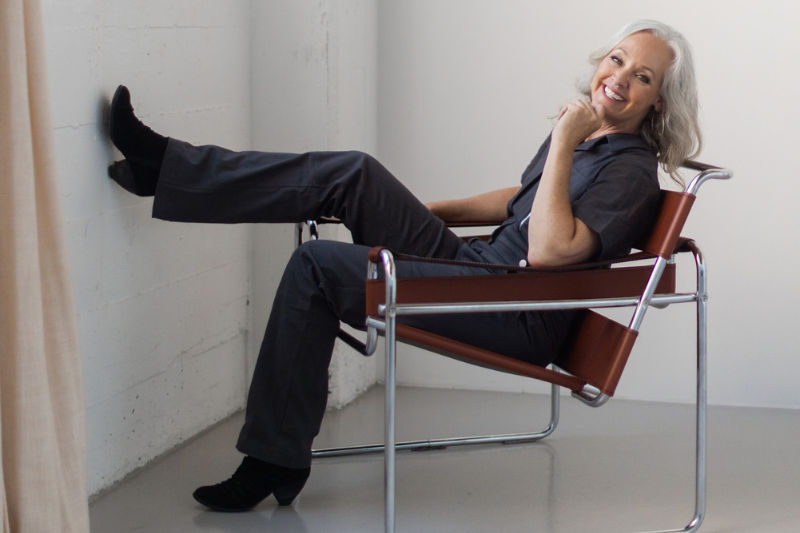
How do you plan shoots so the images still feel relevant months or even years later?
I aim for evergreen.
Trends come and go. There was a time when everyone needed Zoom-themed photos. That’s not what I’m doing now.
We might get a couple of images with a phone or a laptop because it can be useful, but I don’t want technology to dominate a shoot. I want lifestyle portraits, movement, personality, and scenes that will still make sense later.
Multiple outfits and locations help with longevity too. If everything looks the same, you burn through it fast. If you have range, you can use it for a long time.
You don’t only photograph founders. What other sessions do you offer that moms should know about?
I photograph events, which is great because a lot of founders host events and need that coverage.
I also photograph families, and it’s common for someone to hire me for brand photography and then come back for family photos, or vice versa.
I photograph interiors too, which came from working with interior designers for brand photography and then getting requests to photograph their spaces.
And I do senior portraits, which are honestly very similar to brand photography because you’re capturing personality and helping someone feel confident.
If a woman is reading this and thinking, “I’ve outgrown my current photos and I’m ready for something more aligned,” what would you want her to know before reaching out?
I want her to know: I’ve got you.
You don’t need to have all the ideas. You don’t need to show up fully prepared and perfectly confident. That’s literally what I help with.
A lot of women get stuck because they feel overwhelmed. They think the shoot is going to be intimidating, or they assume they’ll be judged. That’s not the experience I create.
This is supported, collaborative, and planned. And it’s meant to elevate your brand in a way that feels like you, not like a costume.
What’s the best first step for someone who feels ready to work with you and wants it to feel easy from the start?
Start with a discovery call. And you don't need to show up knowing exactly what you need. Honestly, most people don't, and that's completely fine.
The call is really about getting a sense of who I am, how I work, and whether we'd be a good fit. We'll talk through the offerings, but I also want to hear about your business and what you're dreaming up for it, not just the photography stuff. That bigger picture is what makes the photos work anyway.
When it's the right fit, you'll feel it. And from there, everything gets simpler.

Ready to elevate your brand visuals with Amy?
Connect with Amy Thompson on Facebook, LinkedIn, or Instagram.
You can also find Amy on The M List, The Mamahood’s searchable database of mom-recommended resources, or connect and collaborate with her inside The Club membership for women Founders.