Dance Movement Therapy for Babies and Toddlers? Aditi Uttarwar of Little Seedlings Therapy Center Is Changing What Family Healing Looks Like in Alameda
Interview by Heather Anderson

Aditi Uttarwar is a Licensed Professional Clinical Counselor and Registered Dance Movement Therapist -- a combination so rare it barely has a category. She is the founder of Little Seedlings Therapy Center in Alameda, where she works with the youngest members of families -- babies, toddlers, and children up to age ten -- and the parents who are trying their hardest to connect with them. Her approach is rooted in something most of us forget the moment we learn to talk: that the body knew how to express itself long before words ever arrived.
You are both a Licensed Professional Clinical Counselor and a Registered Dance Movement Therapist. How did dance lead you into therapy work, and what made you want to build your whole practice around it?
I was on the path of being a doctor -- the healer in me gravitated there -- but I couldn't keep up with all the testing it required. So I gave myself space to figure out what I actually wanted to do. I spent three years working as a product manager at my dad's biotech company, which I was good at but which didn't fill my heart. Then I took a year to soul search.
During that year, a lot of my healing came through dancing. I would dance twelve to fourteen hours a day -- just get into my body and let go. I am a dancer through and through. I have been dancing before I could crawl. And someone posed a question to me during that time that changed everything: is there something that is both dance and therapy? I had never even considered that those two things could exist together. But when I looked into it, my entire resume -- everything I had done in my life up to that point -- was completely stacked for dance movement therapy. And there was no test involved. So I walked that path, and the rest is history.
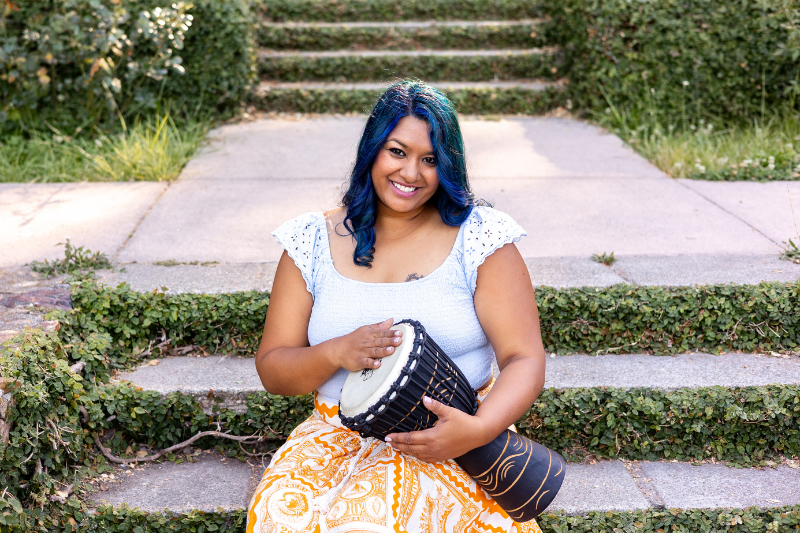
Your practice focuses on the earliest years of life -- pregnancy, postpartum, and children from birth to ten. What drew you to working with babies, toddlers, and their parents at this particular window?
In my own life, I was never really supported in connecting the nonverbal to the verbal. I would hold things, hold things, hold things -- and then it would be too much and I would just explode. There was no support in my family or schools to help me connect what I was feeling in my body to words. I am a deep, embodied, kinesthetic feeler, and I couldn't bridge that gap on my own.
As I grew older and did my own healing work -- my own therapy, grad school, the year of soul searching -- I learned how to make that connection. And the zero to five age group is entirely nonverbal. Children that age are living fully in their bodies. They are having big emotions and their families may not have the tools to understand what those movements and behaviors are actually communicating. So naturally, the healer in me, the lover of children, the dancer, the mother -- all of it points right here. I am right at the cusp of Cancer rising. Nurturing is in my stars. I see it play out every single day.
“Our first language is movement. It comes from the womb — long before we are verbal, we are communicating through our bodies.”
A lot of parents assume therapy is for older kids or adults who can sit and talk. What does therapy actually look like with an infant, a toddler, or a two-year-old?
Our first language is movement. It comes from the womb -- long before we are verbal, we are communicating through our bodies. So what a session with a one-year-old or a two-year-old looks like is play. It looks like creative arts -- art, drama, rhythm, music, dance -- following where the child's heart leads them while I hold an awareness of what the family dynamics are and where the child needs some scaffolding.
What happens in session is the child gets to have so much fun. They get to connect to joy. And then the hard parts show up in the play. And when they do, I stay with it. I can be with it. What happens in families is that parents get triggered and want to move away from sadness or anger -- which is natural and human. But that creates a disconnect. In session with me, I am the container. I have no agenda, no ego, no desired outcome other than creating space for the child's body to do what it already knows how to do. I am just the holder of that container when parents are not yet able to hold it themselves.
You talk about movement and dance as a language beyond words -- a way for children and families to express what they cannot yet say. Can you give us an example of what that looks like when it works?
A child who is struggling with something like picky eating, for example -- there is an emotional component to that, and there is also a practical body component. At my internship site, I worked alongside an OT practice. I would work the mental health and emotional side, and the OT would work the practical sensory side -- introducing textures, expanding food tolerance. Together we were able to support a child in a way that neither of us could have done alone. The emotional expression showed up in the movement and play with me. The practical piece got worked through with the OT. When those two things meet, that is when real shifts happen. That is what movement as language makes possible -- it gets to the places that talk therapy simply cannot reach.
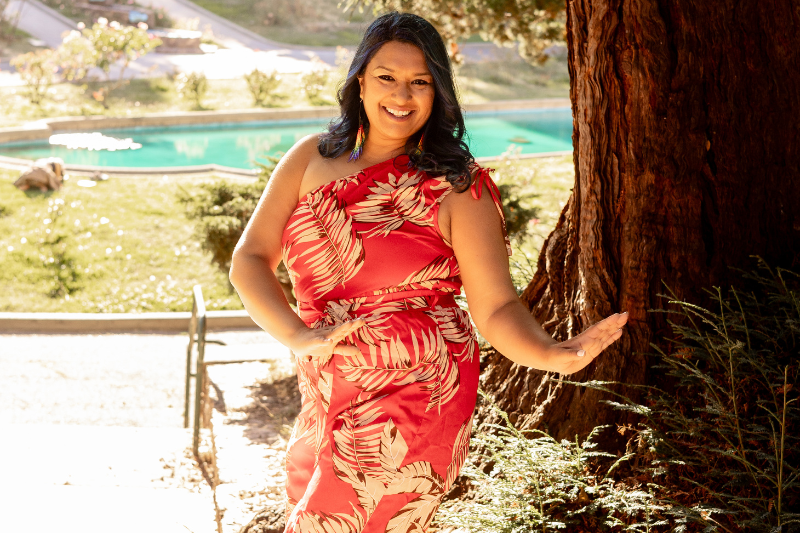
You work with the dyad -- the parent and child together, not just the child in isolation. Why is that relationship the unit of care?
When a parent comes to me and says, my child is doing this and I do not know why and it is triggering me -- that is where we have space to go deep into whatever the parent has experienced in their own life. And then when we come together with the child, we can start to tease apart those threads in real time.
The dyad session is where the dynamic actually shows up. In individual sessions with a parent or a child separately, you see pieces. But in the dyad session, the real thing appears -- and I am there as a third party witness to it. In those moments, I can support the parent in trying new skills with their child right there in the room, see how it lands, and then process it with them when the child is not present. It creates a feedback loop that neither individual work alone can produce. As a therapist, I will come and go in a family's life. Their parents and family systems are the ones who will always be there. My aim is to support the whole system -- not just the child sitting in front of me.
You are also building a free weekly parent support group based on Daniel Siegel's The Whole Brain Child. Who is it for, and how does it work?
This group is for parents who want to grow -- who want to shift their own patterns so they do not perpetuate the harms they may have received in their own lives onto their children. It formed because I watched someone I love, a wonderful and devoted mother, struggle to find tools for her own growth as a parent. Daniel Siegel's book gives twelve very specific strategies, and the group works through each one at a slow, intentional pace.
It is a 26-week closed group -- two weeks per strategy, with a beginning session and a closing session around the twelve chapters. The first week of each strategy is more intellectual: we talk about it, we ask questions. The second week, we discuss the embodiment of the strategy and we come back and reflect on how it worked in real life, what was surprising, what did not land the way we expected. The group is also designed to build community -- a core group of people who can stay connected with each other beyond the program itself.
This group will meet in person for an hour and a half each week. It is free for members who show up and honor their commitment. Life happens, so two excused absences are built in -- but after that, there is a per-session fee, because the commitment to showing up is part of what makes the group work.
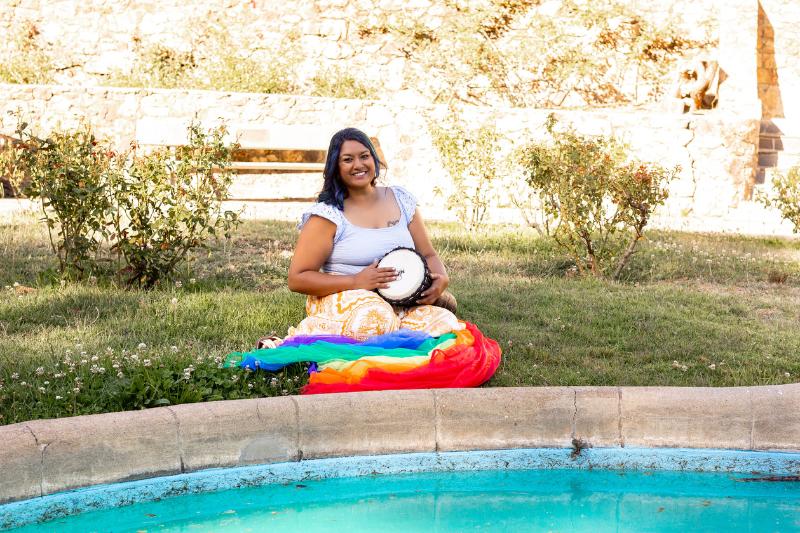
What kinds of families tend to find their way to you?
There are a few different threads. One is parents who have so much love for their child but whose own patterns just do not match -- they do not know how to connect, and they want to figure it out. Another is families where one parent has engaged in a lot of antagonistic behavior, and the other parent is trying to protect the child's wellbeing while navigating a separation or custody process. Those parents are often holding so much, and they need a space that truly sees what they are carrying.
Autism, ADHD, and NICU are other kinds of families that find their way to me.
Then there are families where a child has experienced some kind of trauma -- birth trauma, a single significant event like a car accident, or experiences of physical, sexual, verbal and psychological abuse. I have also supported families through the loss of a baby, which is some of the most tender work I do. In those situations, I am often working with siblings -- the children who are still here, processing grief in a world that rarely knows how to hold children's grief at all.
You offer individual therapy for children, parent coaching, family sessions, and creative movement groups. For a parent who has no idea where to start -- how do you help them find their way in?
I ask a lot of questions and just gently poke around. I plant seeds for all the different ways they might begin, and I validate deeply that they have already opened a door just by finding their way to me and talking. Sometimes a family takes in the information and is not ready. They go try other things. And then a year or two later they come back -- and I am always ready to receive them. I know how to ask the right questions to help a parent start thinking about what kind of support might actually fit them, even if they cannot articulate it yet. And whether or not they choose to work with me, I want them to leave with more clarity than they came with.
Outside of the therapy room you are a dancer and a community builder. What does movement look like in your own life?
I dance by the beach. At the end of a long work day, I go out to the ocean, put on my AirPods, and I dance. Sometimes I have had clients bike by and see me -- and occasionally they stop and do a little movement with me before going on their way. Dancing is my healing. It is what I do for myself, the same way I ask families to trust it for their children.
And I bring it into everything -- my Alameda moms group, my community, my son. He is not always down for mom singing and dancing, but when the mood strikes him and he wants to move, I turn on whatever song he wants and we dance to his heart's content. Those are some of my favorite moments.
You have a vision for what Little Seedlings could become -- a multi-modality healing and wellness space in Alameda where families could access therapy, somatic work, nutrition, legal support, childcare, and more, all under one roof and healing from abundance. Where did that dream come from?
The seed was planted in grad school. I kept seeing how siloed everything was -- therapy over here, OT over there, nutrition somewhere else, legal help in a completely different universe. I do not think it has to be that way. Just like we have pediatricians and dentists built into the rhythm of family life, I believe mental and emotional health support should be too. And most importantly, healing that is happening from a space of abundance.
When I did my internship at the Mariposa Center, the practice next door was all body therapies -- OT, PT, craniosacral work. We collaborated constantly, and I watched what happened when families had access to both. Things moved. Real things. And as my own life unfolded -- navigating my divorce, raising my son as a single parent, experiencing firsthand how hard it is to find legal support that actually sees you -- the wings of this vision kept forming. Five areas: emotional and mental health, somatic and body practices, childcare, nutrition, and legal support. All under one roof. For families who deserve not to have to piece it together alone.
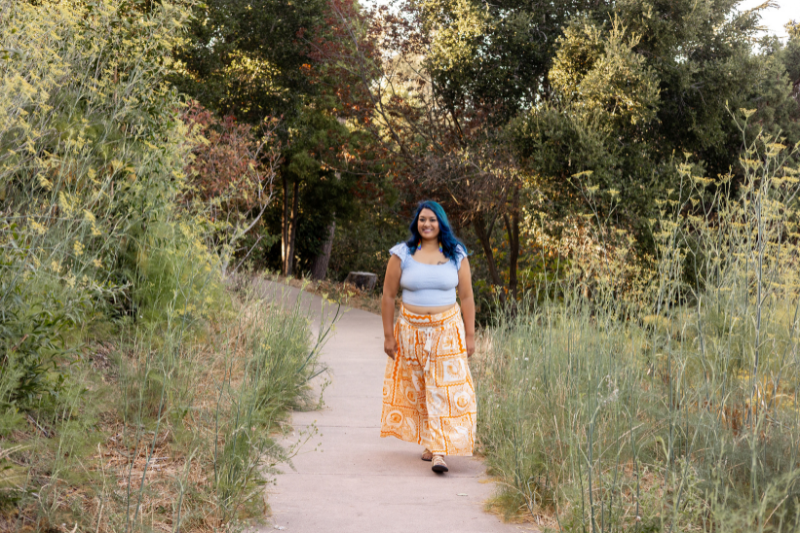
If a parent is reading this and feeling like something is off -- with their baby, their toddler, their postpartum experience, or just the weight of early parenthood -- what would you want them to know?
I would want them to know that as alone as they feel, they are not alone. There is help. There is support. There is love. And the first step is simply starting a conversation. A free initial consultation is always available -- just to talk, just to see if this feels like the right fit, just to feel a little less alone in whatever they are carrying.
Free initial consultation: littleseedlingstherapycenter.com
Free parent support group: The Whole Brain Child group, In Person-- reach out through the website to get on the list!
Individual therapy for children ages 0-10, parent coaching, dyad and family sessions, and creative movement groups -- all available in Alameda and virtually.
Connect with Aditi on Facebook.
You can also find her on The M List, The Mamahood's searchable database of mom-recommended resources, or connect and collaborate with her inside of The Club membership for women Founders.